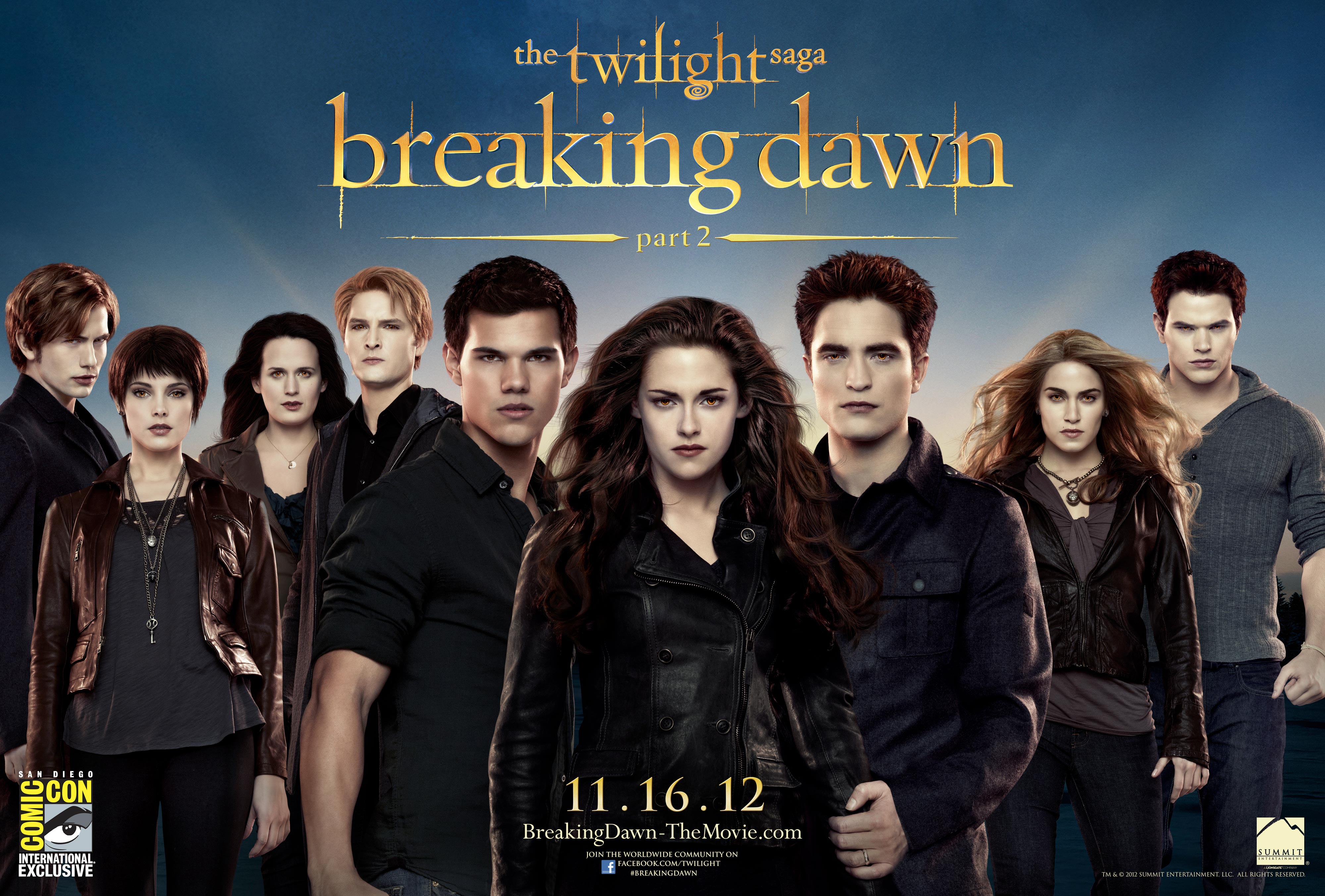
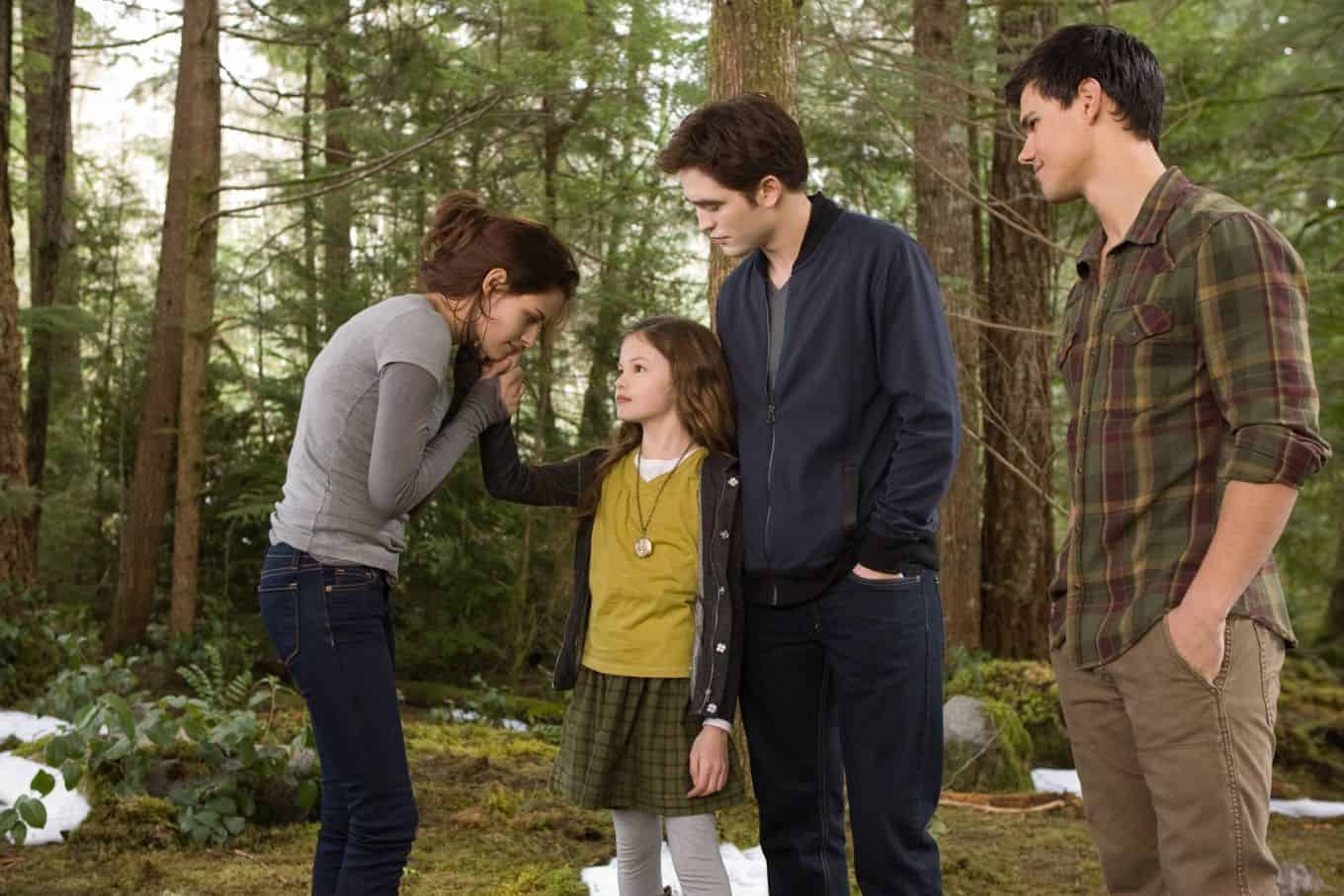
I've been wanting to address the Twilight Saga for some time now, as several of my friends have asked me what I think about the series. Being a huge vampire and literature fan I have a bunch of both pro's and con's to the aspects of the books.
Women of/in literature
First, I'm a huge fan of the female Victorian writers (Austen and the Brontë sisters) and love to dwell in all modern literature in which I find the slightest resemblance to what, according to me, are the best novels ever written. I have a huge respect for the revolutionary thinking behind the 1800's female literature and its writers who set a completely new path with their free-spirited and independent female characters (Elisabeth in
Pride and Prejudice, Elinor in
Sense and Sensibility, Jane in
Jane Eyre, Agnes in
Agnes Grey, Catherine in
Wuthering Heights) addressing and vocalizing the oppression and abuse of the women in the 18th and 19th century, as well as the incompatibility between social values and poverty, which can be referred to both material means (money, housing, servants) as well as characteristics (e.g. the importance of presenting oneself as beautiful and striving for the convenience of marrying wealthy, or being the protagonist who wishes to marry for love). Combining these strong-hearted women with the hierarchically superior man, can only lead to the history's most powerful love stories.
Obviously it tickles my fantasy to see that my favorite books have been re-interpreted in numerous zombie and vampire versions (
Pride and Prejudice and Zombies,
Dawn of the Dreadfuls,
Mr. Darcy, Vampyre,
Sense and Sensibility and Sea Monsters,
Wuthering Bites etc.). And so it would seem that I would have a certain interest in the Twilight Saga, as well.
Which I did, to begin with. I will not deny that I was intrigued with the story plot. Any horror loving individual would be tempted by the plot that contains vampires and (were)wolves (these being a combination of shape shifters and werewolves). And any classics loving individual would be tempted by a story that addresses the aspects of a Victorian novel. I also didn't know anything about the saga. I had seen the Twilight movie, thought it was kinda lousy, and as I was entering the Sci-Fi bookstore in Malmö that day I was actually out to get a copy of another vampire book series that I was reading at the time. However, the store hadn't gotten the book delivered yet, so I asked to be directed to another vampire series that might be worth reading. And so I was on the train back to Stockholm 2 hours later, with Twilight in my hands.
Young adult novels
First of all, I'm not a huge fan of "young adult" novels. Could be due to the fact that I'm in my later 20's, or that I have high expectations of the literature I choose to read since I'm a huge fan of the Victorian era.
Native American folktales
I was excited to see that folktales and traditions of a Native American tribe is being brought to light in modern literature. I've always been fascinated by folktales and the history of indigenous people, which has lead me to reading numerous tales about the Native American tribes in the Pacific Northwest (more so now that I've lived here for a couple of months), the Quillayute being one of them. The tale of the Great Spirit is one of the indigenous people of America's most important one, and the similarity between the warriors spirit journey (during which his body was slayed and he was forced to share the body of a wolf to return to earth in a physical form) is found within the different versions of the shaman in cultures such as the northern Samoyedic and Ngagasan, Sami, Inuit and Eskimo, as well as the völva in Scandinavian Neopaganism (Fornsed, Asatro, Odinism, Theodism), the Wu in China, the Shinto in Japan, the Sangoma and Inyanga in Africa, the Hatalii in Navajo cultures, the Machi amongst the Mapuche people and so on.
To say the least, I am a bit disappointed that Quileute version of this amazing legend was being written off as something to be taken very lightly. An ancient tradition blossoming in the 21st century was covered by the flu and not even shared amongst the entity of the tribe (the Quileute's are a total of less than 800 people) within the borders of the reservation, nor within the entire council, though the story was laid out to one of the pale faces (meaning Bella). I'm an advocate for going for instinct and Stephanie Meyer should have stuck with her original idea, where Jacob never lays out the clues for Bella, and she never happens to see Paul transform. And where the tribe actually keeps its promise of never revealing the truth of the legend to an outsider (and foremost not one who's dating their sworn enemy) and Edward is the one telling her she reeks of wolf.
The presentation of this mind sharing brotherhood was made by a bunch of bare chested adolescents. Don't get me wrong, I don't mind guys taking their shirts off on-screen, but the fact that they are all running around, pumped up and half naked while the outsider of the pack, who ironically happens to be a female, is properly covered by clothes. As interesting and inventive as I find it with an independent and strong female figure (again, tracing back to heroines within literature history), it's even bigger a fault, since there are no records of women transforming or keeping spirit animals within North American Indian tribes. But being fiction, there are no rules of content and there are several traits amongst the characters that I do adore; their warmheartedness and humor, which makes the fate of shapeshifting less of a burden and more of a proud tribe tradition.
However, being a novel series that was intentionally focused towards a younger crowd, I can understand that those readers would provide a lack of interest in history and technical detail, and instead crave characteristics and entertainment which they can relate to. Therefore I can't expect Stephanie Meyer to deliver the adult perspective that I'm craving for. And apparently not the scientific accuracy either, as the wolf guys' body temperatures are contradicting all biosci
ence (a warmer body would actually not be able to sustain homoestasis, its balance, in colder temperature and would logically develop hyperthermia). Or maybe I'm completely wrong here?
The history & character of the vampire
Here's the big but, I can't ignore the fact of the lack of detail to the character of the vampire. Which brings me back to the history of the vampire tale and my relation to literature written on the subject. It is safe to say that I am (of course) a huge fan of
Bram Stoker and with having read
Poe and
Lovecraft since I was 14, I have gained a very personal and objective perspective of the vampire creature; the mysterious and macabre.
If vampire literature had a template and vampire history had a Bible,
Bram Stoker's Dracula would be that artifact. It contains all elements necessary to create an aristocratic fiend among high society. It has geographical and historical precision as well as proper and detailed character descriptions and development. It's strongly influenced by the 18th century poetry where the literary vampire first appeared making it the perfect example of a gothic literate in vampire format. It stays true to its sources (the Eastern European folktale of vampires) by keeping the demonized and inhuman characteristics of the vampire intact, while at the same time presenting him as any other handsome and seductive gentleman.
These traits and the genre itself have during recent years evolved and diversified into the areas of fantasy, sci-fi and crime, amongst others. The repulsive creature from Eastern European folktales (who was in fact a deranged corpse) has suddenly turned into a glittering, marble faced teenager. It seems nowadays that authors pick amongst the vampire traits that history provides them with that they see fit and then discard the rest as "rumors" or being made up by mortals. The same is indicated in L.J Smith's
The Vampire Diaries which, like the Twilight Saga, is a series amongst the new genre "young adult vampire horror". Although I respect the freedom that comes with writing fiction, I still consider being true to your subject a matter of principal.
Being raised on the gothic aspect of vampire and horror literature I personally consider a couple of traits being impossible to detour from:
1. Daylight is fatal to vampires
No matter how it affects them (preferably burning their skin in one way or another), vampires are not daywalkers. Ergo, they will not glitter when placed in the sun. I don't know if this is Stephanie Meyer's way of romanticizing her evil character or censoring it for her younger audience. It could even be her way of either easing her own Mormon conscience for writing this unholy type of fiction, or her honest statement of reality since modern Mormons claim to understand the supernatural (Yes, apparently that claim to have that ability). I just can't wrap my mind around where the glittering idea originated from? Of all things she could think of, she chose to transform one of the most powerful creatures in fiction into something that glitters!???
2. Wooden stakes are a pain in the ass
I don't know how Stephanie Meyer would address the issue of using a wooden stake and I don't remember if this is ever mentioned in any of the books either. The head removal part is present, for which I am grateful, I just don't follow the squeaking steel (or was it shattered glass, I'm mixing up the books with the movies here?) sounds following decapitation. I guess everyone have different sound fetishes.
3. Blood is the only vampire diet
Whether they choose to obtain it from animals or humans, fresh or bottled up, doesn't really matter. What matters is that a vampire isn't tempted by any other food or beverage than his need for blood. Off course it is physically possible for a vampire to swallow any other food object, just as it is for a human to indulge themselves in some blood drinking, it is just not optimal. I honor Stephanie Meyer for staying true to this fact (unlike Stefan and Damon Salvatore who seem to have an obsession with whiskey?).
Speaking off food consumption - it would be interesting to know how the metabolism of a vampire works? Do they still have a ventricle to digest to blood that they drink or does it simply run out into their veins and limbs as they swallow it?
Which brings me to the big question mark of the whole sexual thing. It is mentioned in Twilight how fascinated Edward is with Bella's ability to blush. This would automatically mean that this is something that is no longer functioning in his own body, ergo he has no blood being pumped out since his heart is dead and therefore no blood flowing through his veins. I am therefore very interested in the anatomical function behind his body fluids that apparently first, made him after to be sexually active with Bella and second, knocking her up. Very interesting.
4. The humanization of a vampire...
.. can only be made to a certain extent. While I would consider it possible for vampires to live in clans (being a characteristic amongst all mammals and most animals, it is also logical that it should be one amongst fictional beings) I don't think they would fall into the patterns of the everyday family with such ease that is being presented in Twilight. Although they've had their struggles in the past ... 80-150 years, it still wouldn't seem logical for them to portrait themselves as happily ever after without any out-lease for their true nature, which the Cullen family doesn't seem to have as they keep repressing their true nature through the entire novel series.
The strong female characters...
The most intriguing part of a Victorian novel is the first encounter between the male and female characters. The emotions and actions which they display during their first meeting will come to outline the rest of the story, as the difference in their personalities and the incompatibility of their strong, and mostly often stubborn, minds are what guides them through the book. Mr. Darcy's pride and feelings of superiority blinds him to acknowledge how his behavior is perceived by others as he struggles with the attraction he feels towards Ms. Bennet. In the mean time, Elizabeth Bennet considers her own judgment of human character to be as superior as to letting her prejudice against Mr. Darcy being fueled even further by his arrogant actions towards her, prevailing her from confessing her true feelings for him.
There are two traits that are being put at risk; their values and morals, and how they perceive themselves and people around them. Mr. Darcy continues to carry the values of a perfect gentleman as it's how he was raised, but learns that there is no such thing as superiority and being inferior when it comes to love. Elizabeth Bennet continues to carry a stubbornness in her values, but finds it in her to let her prejudice and guard down, once she finally realizes that she has the chance to marry out of love and not out of the rules set by society.
... and the lack thereof.
The same scenario can be found in the encountering of Bella and Edward; Bella being the forgiving and warm-hearted female who tends to see the good side in everyone except herself and therefore not being beautiful and interesting enough for the immortal vampire, who sees himself as an abomination and therefore not even considering himself being worthy of Bella's love. Both convictions are cultivated as the story develops. Bella comes to realize that Edward spent the last 80 years alone because he didn't find any interest in the human females whom he encountered since he could read their minds and therefore they became too predictable to be worthy of his attention. Neither did he find any attraction in the beauty of the vampire females whom he met with, and although Bella continues to see herself as plain in comparison, she begins to realize that it's her inferior physics but her superior mentality (since he can't read her mind she becomes unpredictable and with that interesting) that makes him protective of and attracted to her. Edward comes somewhat to terms with his own fate, realizing that immortality doesn't have to mean that you are condemned and that he can be worthy of being loved.
The perceptions in Bella and Edward are being altered, as with any couple in a love story, but where it fails is when Bella looses all her values and morals too.
The first encountering is of course one of the most important parts in all vampire literature, as well. It's the moment where all the promises are being made and the expectations are to be lived up to. Every vampire-human encounter is unique and interesting in the different way that the vampire presents his world and how the human responds to the offering of eternal life. In Twilight Edward describes his world to Bella as an unglamorous and unwanted existence. To this Bella responds with the demand of being changed, never even taking the time to consider the consequences of such a decision.
In
Interview with the Vampire, the vampire is initially introduced as Lestat de Lioncourt, an angel, with "fine black hair" and "deep green eyes" by which appearances and passion the human mind is seduced. The consequences of falling in love is later on clearly visible in the life story of Louis de Pointe du Lac, who spends his entire life (non-mortal one) in complete and utter despair. It's heartbreaking to read. It's heartbreaking to know that no matter how many times Lestat is pleading his love for Louis by referring to him as his lover, his soulmate, the only one he would ever love, protect and kill for, Louis finds his immortal life to be no relief from the desperation and meaningless he suffered in his mortal days. The eternity of immortality and beauty suddenly doesn't seem as appealing as Louis finds himself resentful towards living his life bounded by the hours of night and the need to kill.
So Bella abandons all sense of reality and sensibility and is ready to cut all her emotional and physical bonds with her previous life, including her biological family. All for the sake of love. That this decision would so fleetly but determinedly be made by a 17 year old seems highly unlikely. The fact is that Bella's infatuation with Edward sets back the role of the woman a good 60-70 years; back to the inferior suppressed situation of women, which femininity has battled with for the last half century. Bella completely regresses herself into this helpless creatures, enhancing the "mortal" aspects to her character; being clumsy, plain, physically weak, boring etc. Edward puts her on a pedestal at which he worships her, when he at the same times handles her like live stock that's made of glass- being traded with above its head and ready to burst at any touch. You just wanna shake her and tell her to
GET A GRIP! A love story needs a strong male, the hero that saves the damsel in distress, not suffocates her with his obsessive and stalking manors.
Predictable, stereotype characters...
Stephanie Meyer can't seem to break loose from the stereotypes of women. If this is due to her being a Mormon or due to the American society's role models in general, it beats me. It just astounds me that all of the female characters seem to be adopted from the 1980's novel series
Sweet Valley High. All of them have fantastic traits and interesting side aspects that are being shun over for the convenience of being stereotypical.
Alice's bubbling and childish personality is being hid behind the classic shopaholic, materialized teenage girl. Rose's intriguing interest in cars is being discarded by the classic beauty that turns too self confident and develops a way too bitchy attitude. Esme's warm and motherly characteristics could make her the strongest bond in this clan, had she not been hidden in the shadow of her husband. Angela's intelligent and responsible character could be someone that young girls could take inspiration from as she would be a genuinely healthy role model, but because of this she's being discarded as the boring and geeky one. Jessica's hilarious but naive attitude is later on displayed as the traitorous and shallow backstabber.
... and the inferior woman
And Bella, who has an interesting personality as her mind differs from the rest, is quickly adapted to the role of the inferior, dependent girlfriend (the typically shunned house wife) as soon as she connects with Edward. Although I find Edward's stalker tendencies kinda cute, I still can't accept that Bella allows herself to become the victim of just the incompatibility between social values and poverty, as I mentioned earlier. Edward is from her point of view portraited as superior in material means (housing, money) as well as physical characteristics. I can't even begin to count for how many times she refers to his "God like appearances" or his "marble stone face". He's an Angel, an incomparable beauty, even perfection itself. In comparison, Bella becomes inferior to all aspects of Edward; her lack of money (as he even tries to pay for her college tuition as well as paying for the entire wedding and buying her a new car), her lack of beauty (again, she refers to herself as simply plain and gray in comparison) and suddenly her entire character is adjusted to fit the role as the inferior female.
Why does this keeping on happening? Why would a female writer deliberately make her female characters inferior, as they seem less worthy than their male mates?
Had Stephanie Meyer decided not to loose the integrity of her female characters, this might have been a step towards a strong female group, in resemblance of the Bennet sisters. Unfortunately Stephanie Meyer chose to give in to society's social values and therefore screwing every chance of ever qualifying her novels as akin to either the classic love och vampire novels. Too bad.